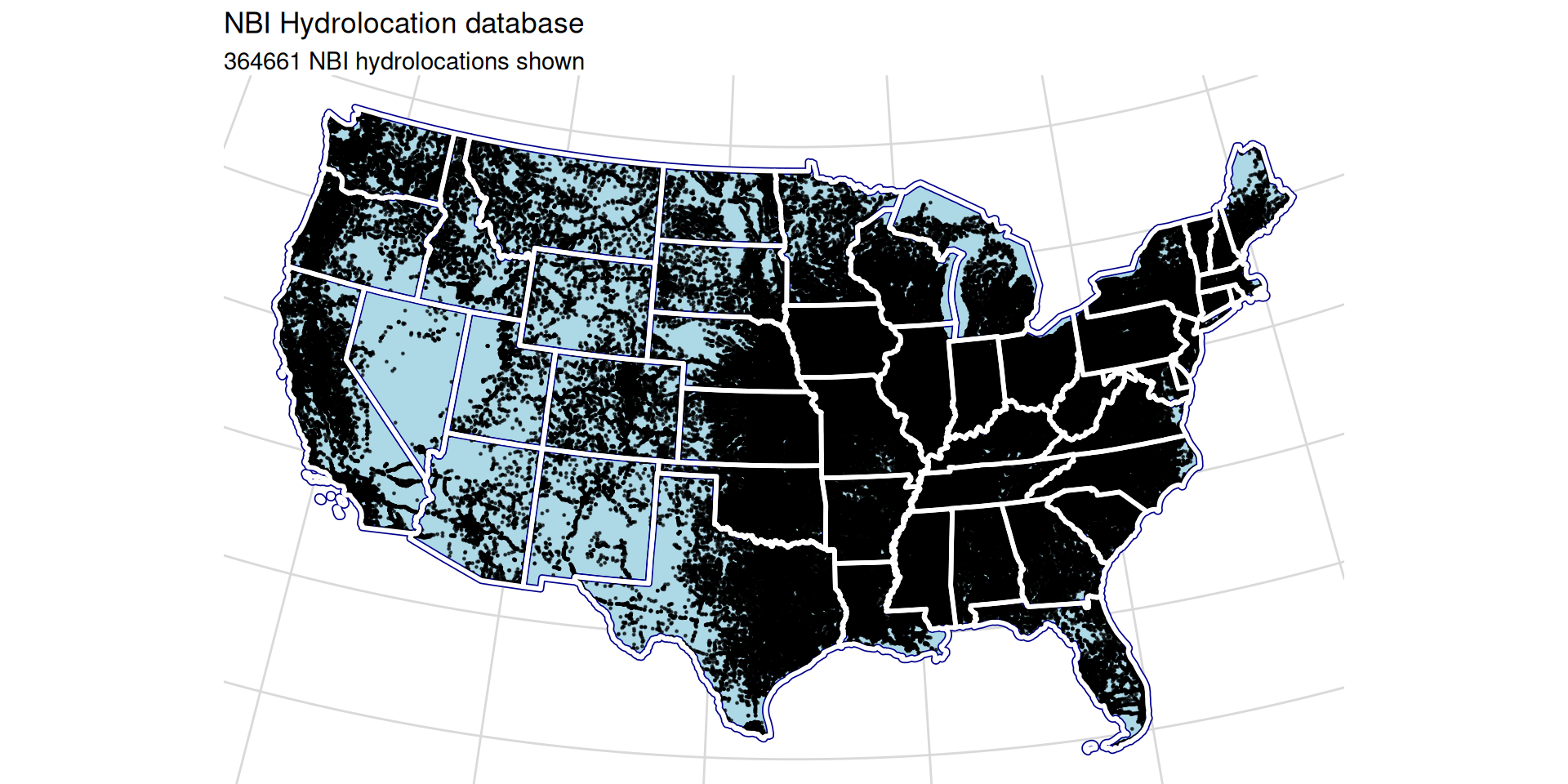
NBI Hydrolocation Considerations
Goals:
Outcomes:
- A better understanding of the data and processing algorithm applied in the creation of a national database
- A file useful for hydrofabric network creation and OSM/NBI ID conflation workflows
Presentation Navigation Tips
Slide layout : This deck has one axis, use any key to advance.
: This deck is narrative-oriented
Items linked/bordered in green are cited in the tooltip on hover.
Items linked/bordered in blue are hyperlinked to relevant resources.
Photos are Allowed | Questions are Encouraged
: ~5 minutes | Last updated:08/15/2026 19:28:07
! PLEASE !
Interrupt me and ask questions or clarifications.
I’m here to talk with you now, not to these slides.
Control tips
My preferred (FOSS) flavor of slidedecks, revealjs, has intuitive but none the less unconventional PowerPoint presentation controls:
- Slides dynamically resize to use the entirety of the browser window, but you can still fullscreen with
F.- This slide has a red border indicating the content extent.
- Slide navigation is mode dependent. If there are vertical slides, press
space,N, or thedown arrowkey, not theright arrowto advance slides - Press
Mto open to the menu, PressOfor the slide deck overview, PressBto black out the presentation screen, PressSfor a speaker view. - You can use the chalkboard to freemouse/touchpad draw.
- Slides should render as designed1 but you can press
Alt/Opt+ click on the slide to zoom in. Increase text size withAlt/Opt++,Alt/Opt+-to decrease, andAlt/Opt+0reset to the default scale. - Press
Cto declare victory and head home.2

Refresher: Hydrolocations
- Hydrolocations store the source, identifier, and index of a critical location
- Points of Interest (POIs) aggregate co-located hydrolocations to singular network locations
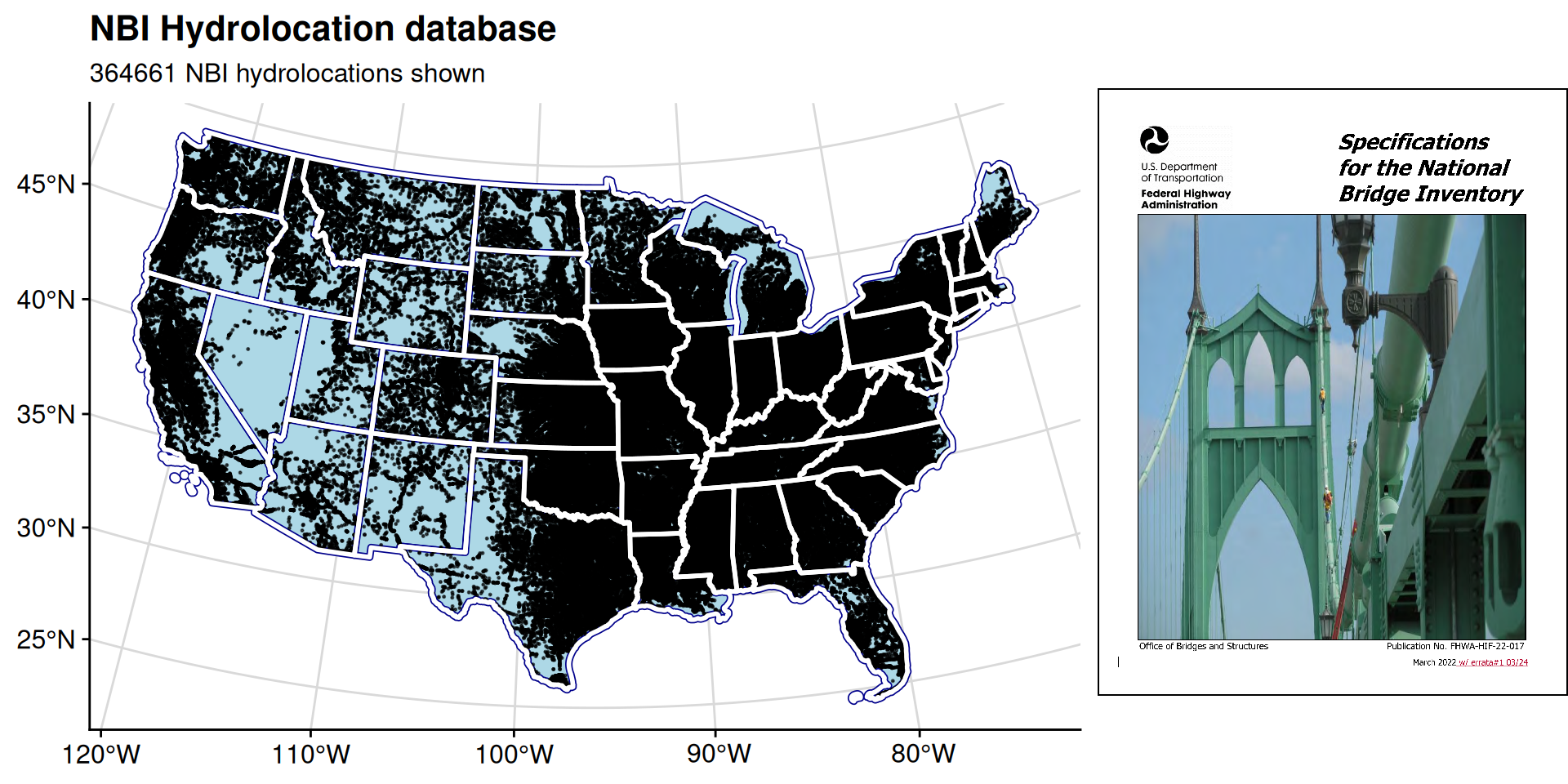
Conflation method
How do we match a federal point database (NBI) to a crowdsourced line database (OSM)?
- Spatial Proximity Filtering (The Net): Create a search radius (buffer) around the NBI coordinate to capture all intersecting OSM candidate lines tagged with
bridge=yes. - Attribute & Topological Scoring (The Filter): Evaluate candidates based on geometric orientation (does it cross the stream?), hierarchy (does the NBI highway class match the OSM road type?), and intersecting water layers.
- Network Snapping (The Anchor): Once the correct OSM segment is confidently identified, snap the conflated POI to the highest-resolution hydrofabric routing line.
Reprocessing:
- Noted misalignment/errors with previous process
- Some bridges appear misaligned with basemap at high resolutions.
- Large areas missing geographic coverage.
- Inconsistent processing methodology applied to scale.
- Traced to bridge line data
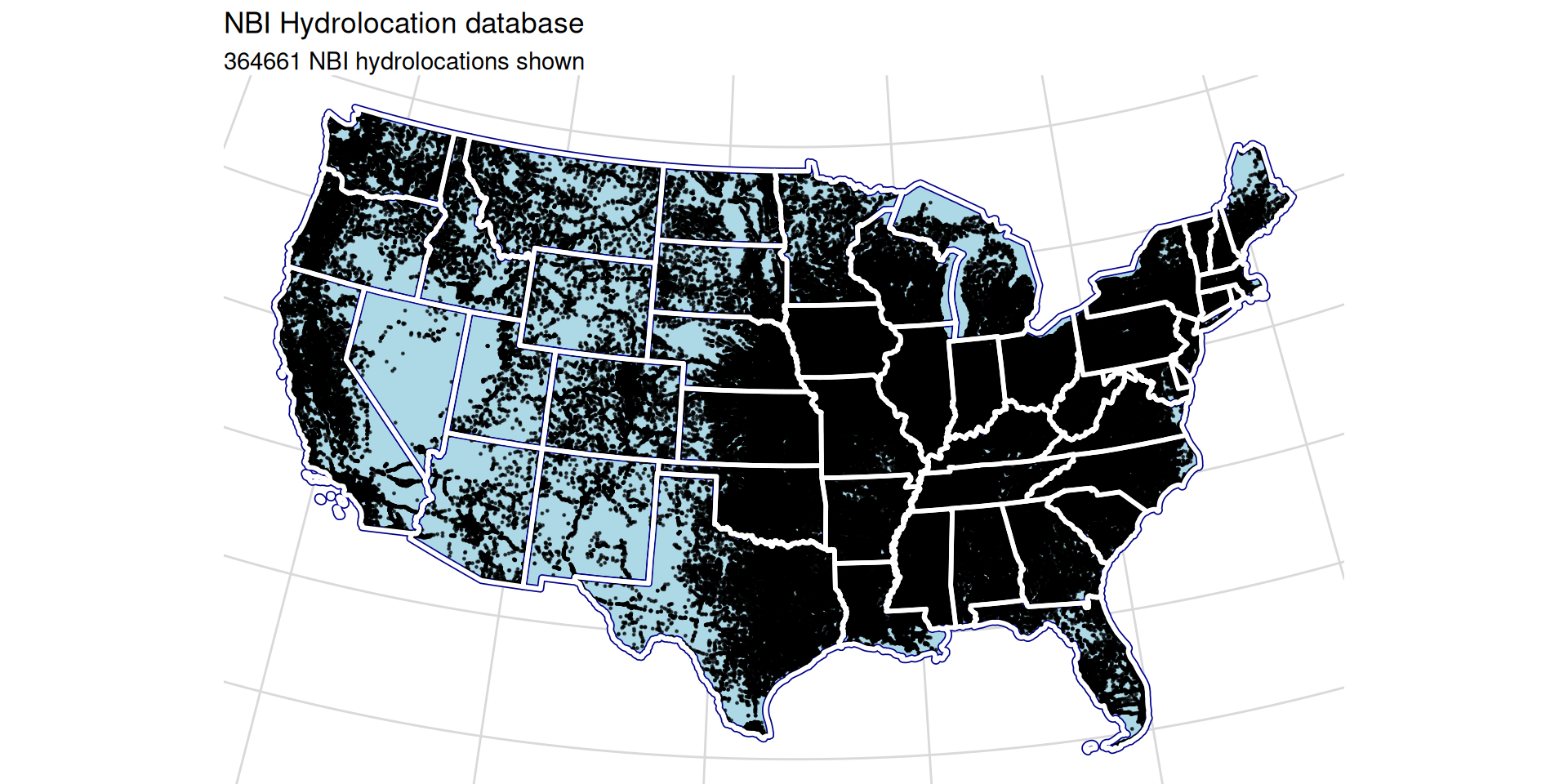
What’s next?
Outcomes and Takeaways:
Next Steps:
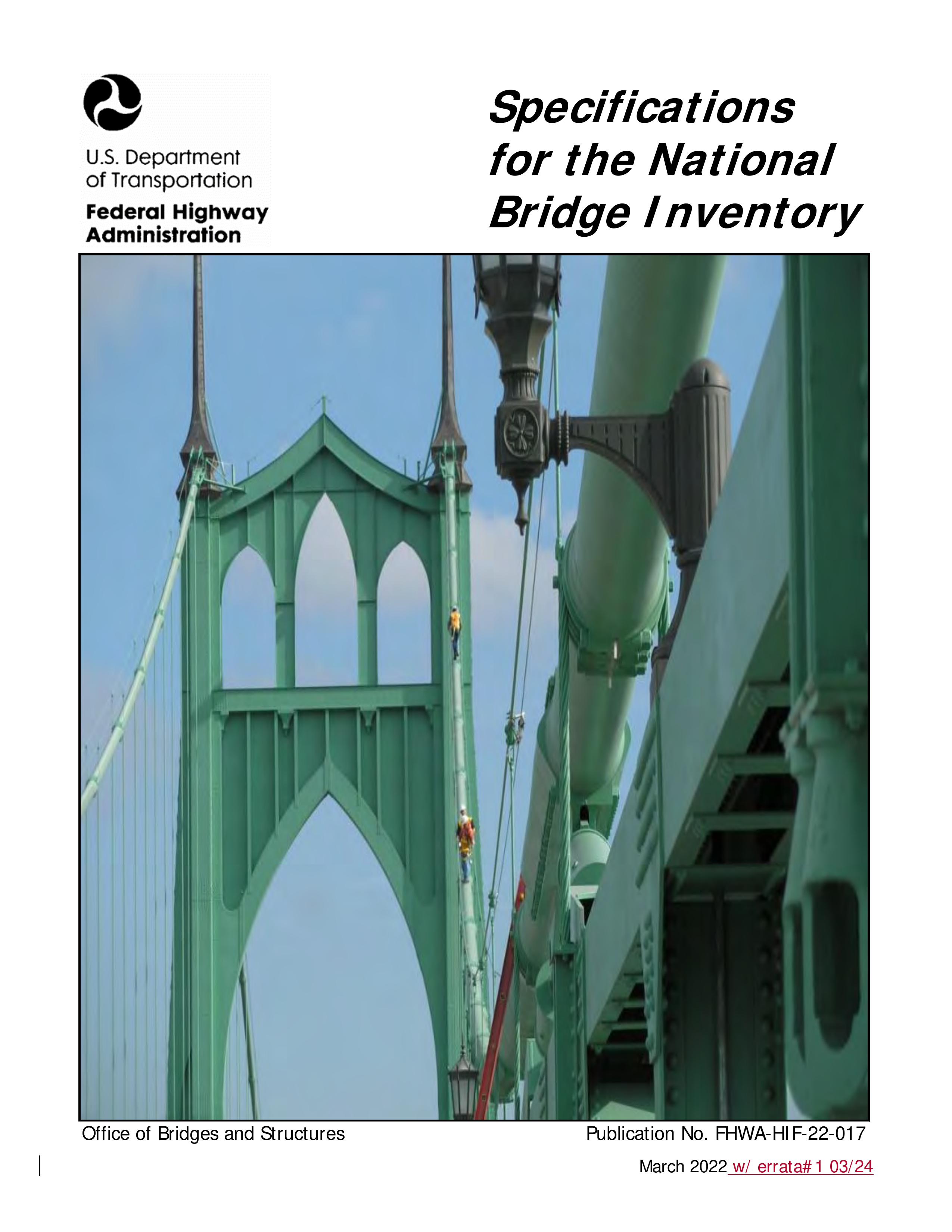
Specifications for the National Bridge Inventory w/ Errata#1 03/24 (2024)
See notes (s) and frames for image sources.