Review: Time to Update the Split‐Sample Approach in Hydrological Model Calibration
Reviewing: Time to Update the Split-Sample Approach in Hydrological Model Calibration
Goals:
- Prove I can read.
Outcomes and Takeaways:
- A shared understanding of the methods and efforts our giants have provided.
- A better appreciation of how this effort leaned on previous efforts.
Shen et al. (2022)
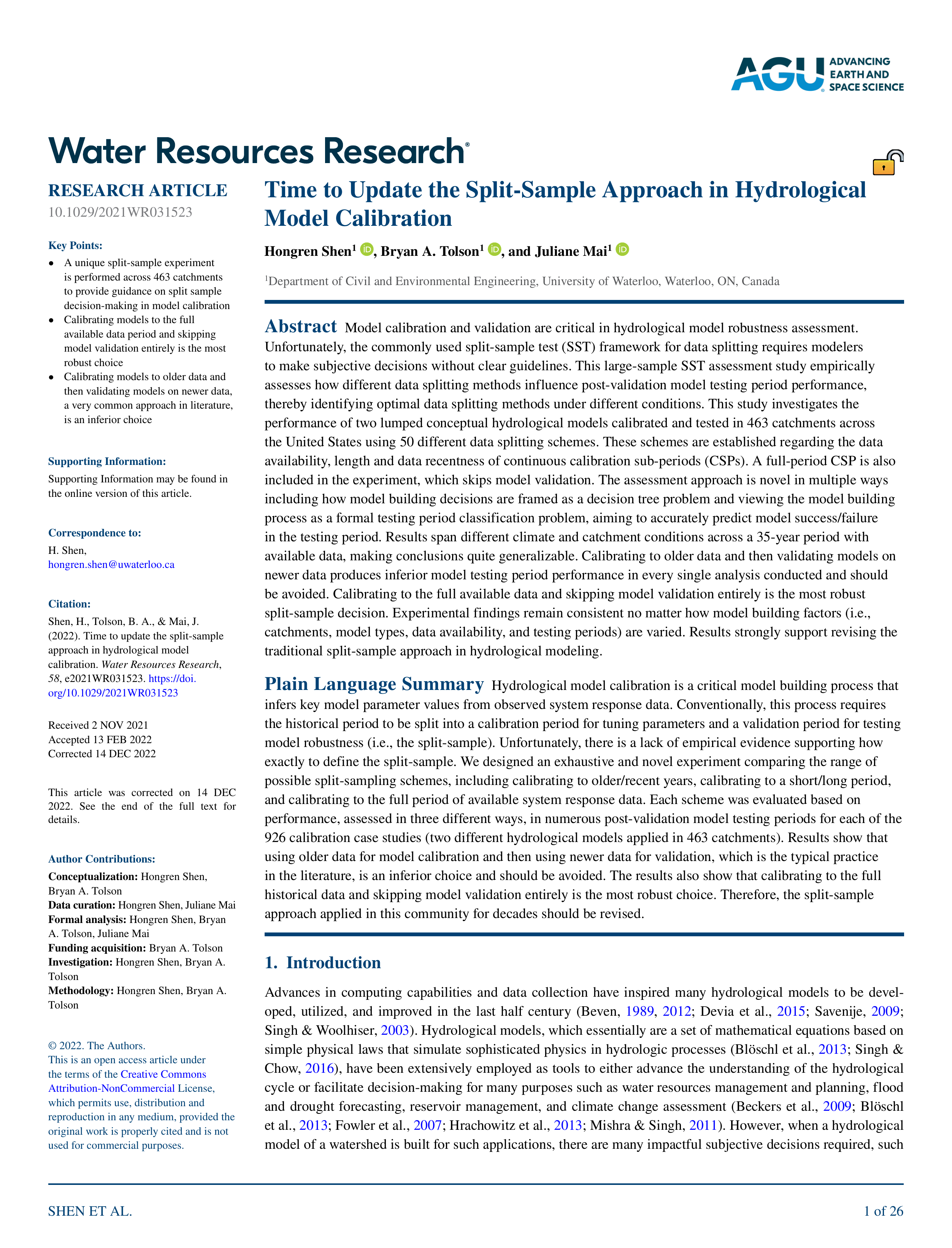
Methods
Question:
- What is the best way to perform a split sample test?
Methods:
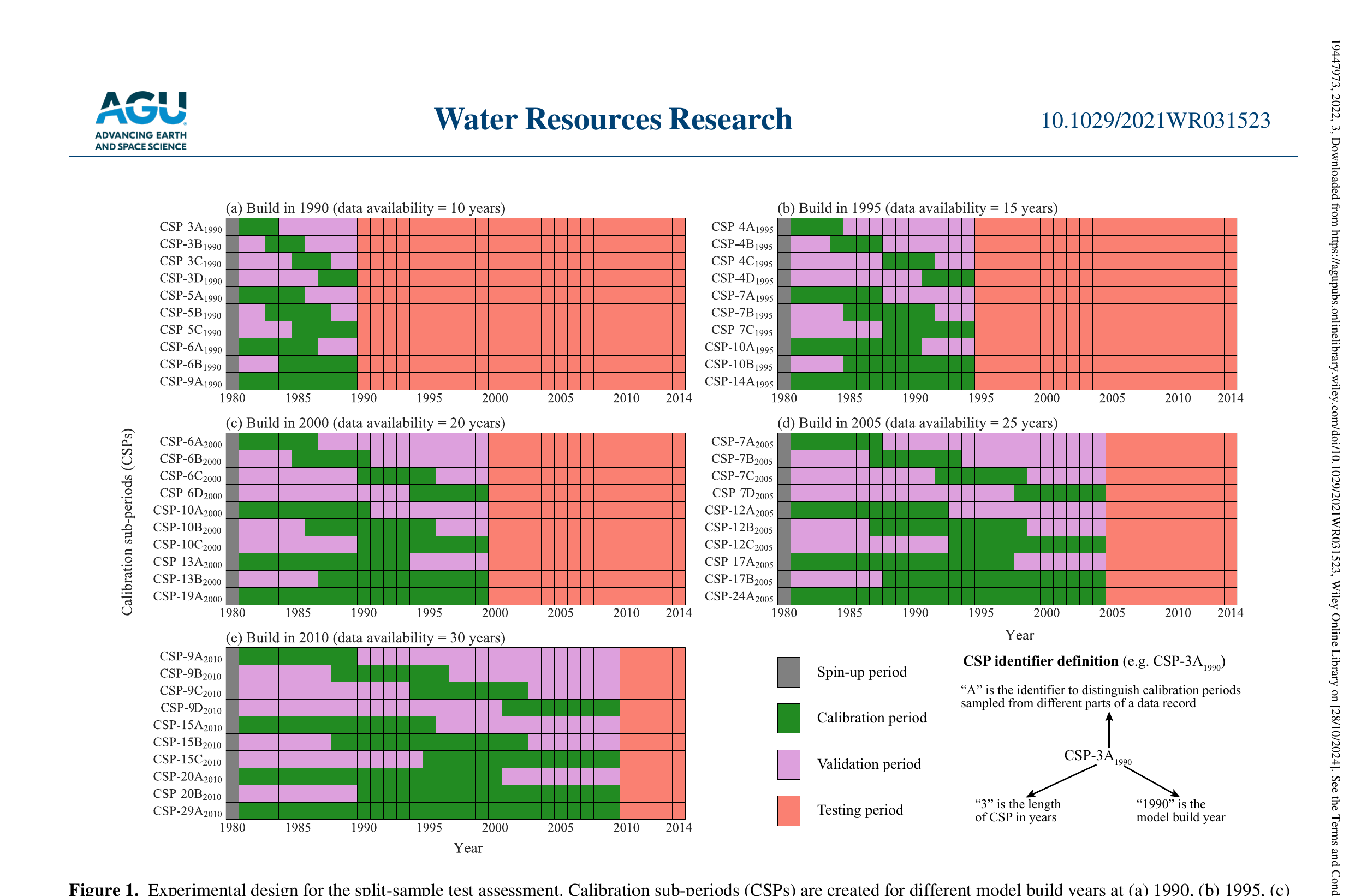
- Authors calibrated two lumpped models (GPU4 and HYMETs) in 463 CAMELS catchments using different split sample schema.
Findings:
- Found that we should skip validation.
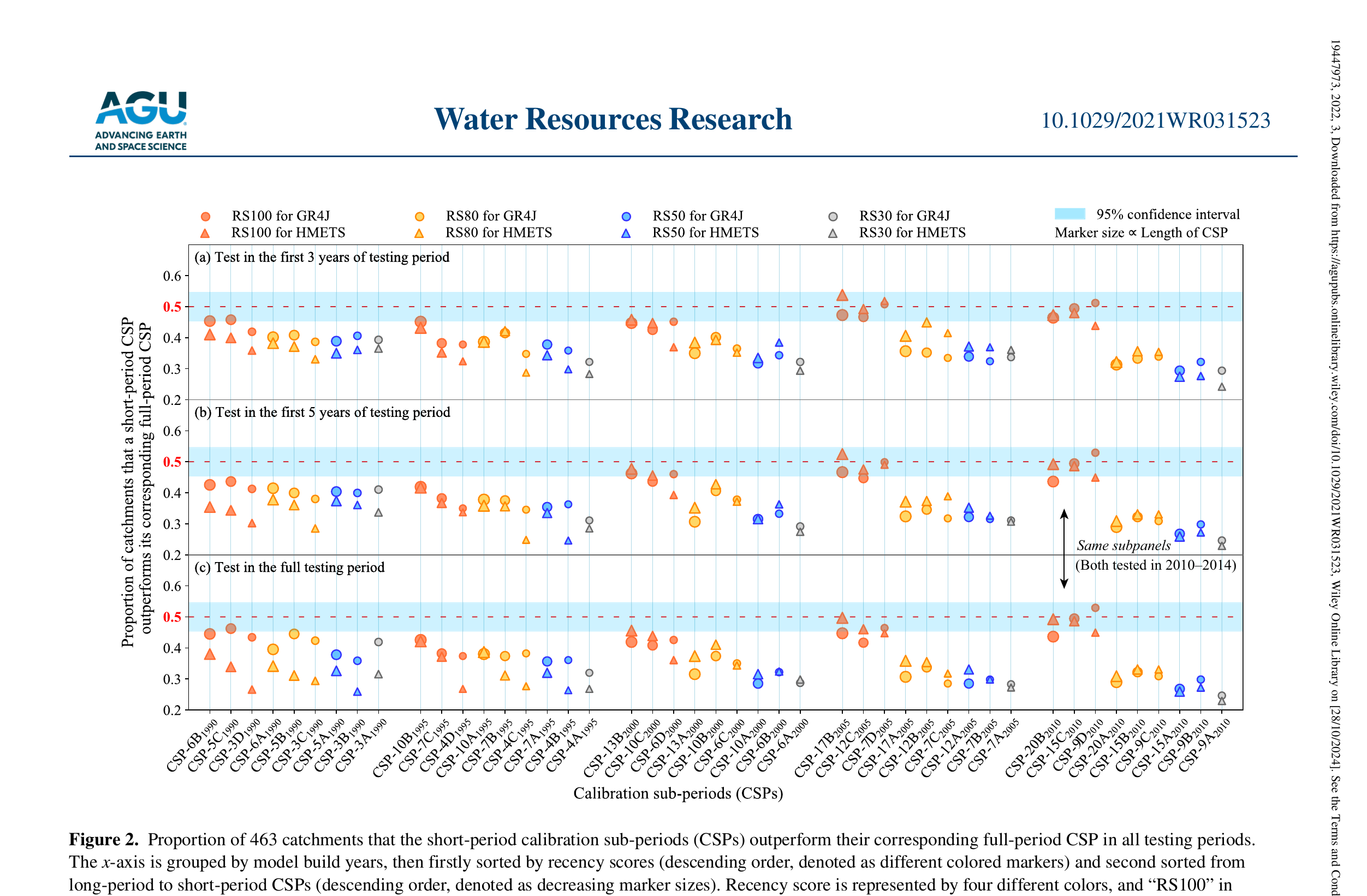
Results
What have we learned?
- analyzed the results of 926,000 model calibration experiments and 129,640 post-validation model testing instances generated using two hydrological models applied in 463 catchments across the CONUS
- Calibrating models to older data and then validating models on newer data produces inferior model testing period performance in every single analysis conducted and should be avoided.
- Calibrating models to the full available data period and skipping temporal model validation entirely is the most robust choice and eliminates additional subjective decisions.